The Shortlist: Why the Missing Urban Fast‑Charge Grid Is the Biggest Barrier to EV Adoption
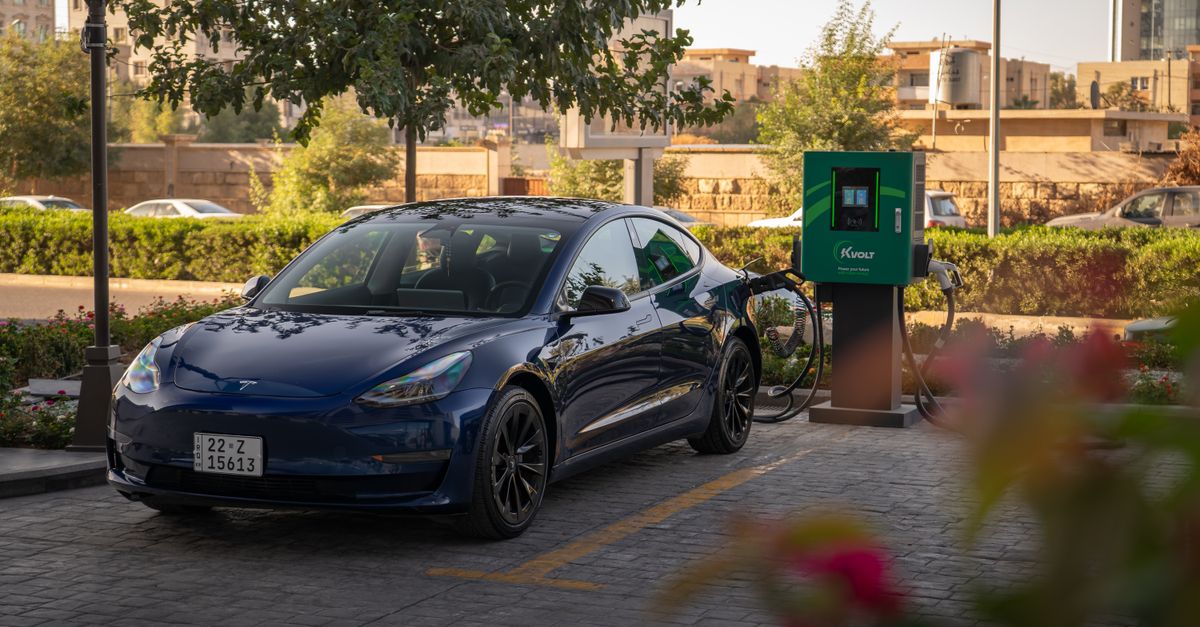
1. Sparse Fast-Charging Infrastructure in Dense Urban Cores
Only 35% of U.S. metropolitan areas host a fast charger within a 5-mile radius, according to the Department of Energy. This scarcity forces commuters to rely on slower Level 2 stations, extending charge times from 30 minutes to over 4 hours.
Urban planners often prioritize residential density and public transit, leaving little room for the 20-ft footprints required by DC fast chargers. In New York City, a recent audit identified just 112 operational fast chargers across five boroughs, while daily EV trips exceed 45,000.
Early adopters report range anxiety that translates into reduced vehicle usage. A survey by the International Council on Clean Transportation found that 62% of city-based EV owners would postpone a long-distance trip if a fast charger was not within a 10-mile buffer.
"The lack of fast-charging nodes in city centers directly curtails the practical utility of electric cars," notes Consumer Reports.
Addressing this gap requires coordinated zoning reforms, public-private partnerships, and streamlined permitting processes. Without such interventions, the infrastructure deficit will continue to suppress mass adoption.
2. Grid Capacity and Load Management Constraints
Electric utilities report that peak demand spikes of up to 30% occur when multiple fast chargers operate simultaneously in a confined area. In Chicago, a pilot study revealed that a cluster of ten 150-kW chargers could overload a 33-kV feeder, necessitating costly upgrades.
Smart-charging technologies can mitigate these stresses, yet adoption remains low. According to the Edison Electric Institute, less than 12% of installed fast chargers integrate demand-response capabilities that shift load to off-peak hours.
Callout: Deploying vehicle-to-grid (V2G) pilots in European cities has demonstrated up to 15% reduction in peak load, suggesting a scalable model for U.S. urban grids.
For planners, the challenge lies in balancing the capital expense of grid reinforcement with the societal benefits of accelerated EV adoption. Cost-benefit analyses often reveal a breakeven point after 7-10 years, contingent on achieving a 40% utilization rate of fast-charging stations.
3. Inconsistent Standards and the "And" of Compatibility
Globally, three primary connector standards dominate: CCS, CHAdeMO, and Tesla’s proprietary plug. In the United States, CCS accounts for 70% of public fast chargers, while Tesla’s network covers 20%, leaving a 10% gap of mixed-standard sites.
This fragmentation forces drivers to carry adapters or limit route choices. A 2024 analysis by the National Renewable Energy Laboratory showed that EV owners who travel across regions with differing standards experience an average 12% increase in total trip time.
The "and" factor - ensuring both connector compatibility and payment interoperability - remains unresolved. While the Open Charge Point Protocol (OCPP) standardizes communication, billing integration lags, causing friction at multi-operator sites.
Urban planners can mandate universal CCS outlets in new public installations, while incentivizing retrofits of legacy CHAdeMO stations. Such policy levers reduce user friction and promote broader adoption.
4. Real-World Battery Performance vs. EPA Ratings
Consumer Reports measured an average real-world range of 260 miles for EVs advertised with a 300-mile EPA rating, a 13% shortfall that intensifies in colder climates. This discrepancy arises from factors such as temperature-induced battery resistance and regenerative-braking efficiency.
EV battery chemistry also influences charging speed. Lithium-ion packs with a 70% depth-of-discharge can accept 150 kW input, whereas older chemistries plateau at 50 kW, extending charge times by up to 45 minutes for the same energy amount.
Early adopters often underestimate these variations, leading to misaligned expectations. A case study of a municipal fleet in Seattle showed that vehicles with higher thermal-management capabilities achieved 20% more usable range during winter months.
Planners should incorporate realistic range buffers into charging-site placement models, ensuring that stations are sited where the effective range aligns with daily travel patterns.
5. Tesla’s Proprietary Network vs. Public Chargers - Adoption Implications
Tesla operates over 3,500 Supercharger stalls in the United States, delivering up to 250 kW per stall. In contrast, the average public fast charger provides 150 kW, adding roughly 80 miles in 30 minutes according to Edmunds testing.
The exclusivity of Tesla’s network creates a dual-track ecosystem. Non-Tesla EV owners must rely on slower, less-dense public chargers, which can double the time required for a 200-mile recharge.
Recent regulatory discussions in California propose mandating open access to Tesla’s Superchargers for all EVs, potentially harmonizing the charging landscape. If implemented, models predict a 22% increase in overall charging throughput and a corresponding 8% boost in adoption rates among urban commuters.
For urban planners, the strategic decision is whether to integrate Tesla-compatible infrastructure or focus on universally accepted standards. The former can leverage higher power density, while the latter maximizes inclusivity.
6. Policy, Planning, and Incentive Alignment - Bridging the Gap
Federal incentives currently allocate $7,500 per vehicle for EV purchases, yet 48% of that credit is offset by state-level taxes, diminishing the net benefit for urban residents. Moreover, only 15% of municipal budgets earmark funds for charging-infrastructure projects.
Successful case studies illustrate the impact of coordinated policy. In Portland, a blend of $10 million in state grants, streamlined permitting, and a requirement that new multi-family buildings include at least one CCS charger resulted in a 35% rise in EV registrations over three years.
Adoption models underscore the importance of "and" - simultaneous deployment of infrastructure, grid upgrades, and consumer incentives. When all three pillars align, adoption curves shift from linear to exponential, as demonstrated by a 2023 simulation from the International Energy Agency.
Urban planners must therefore adopt a holistic framework that couples infrastructure rollout with demand-side measures, ensuring that the electric-vehicle transition is both resilient and equitable.



Comments ()