How One Biosciences’ $200 Million Albany Campus is Reshaping the Capital Region Biotech Landscape
— 7 min read
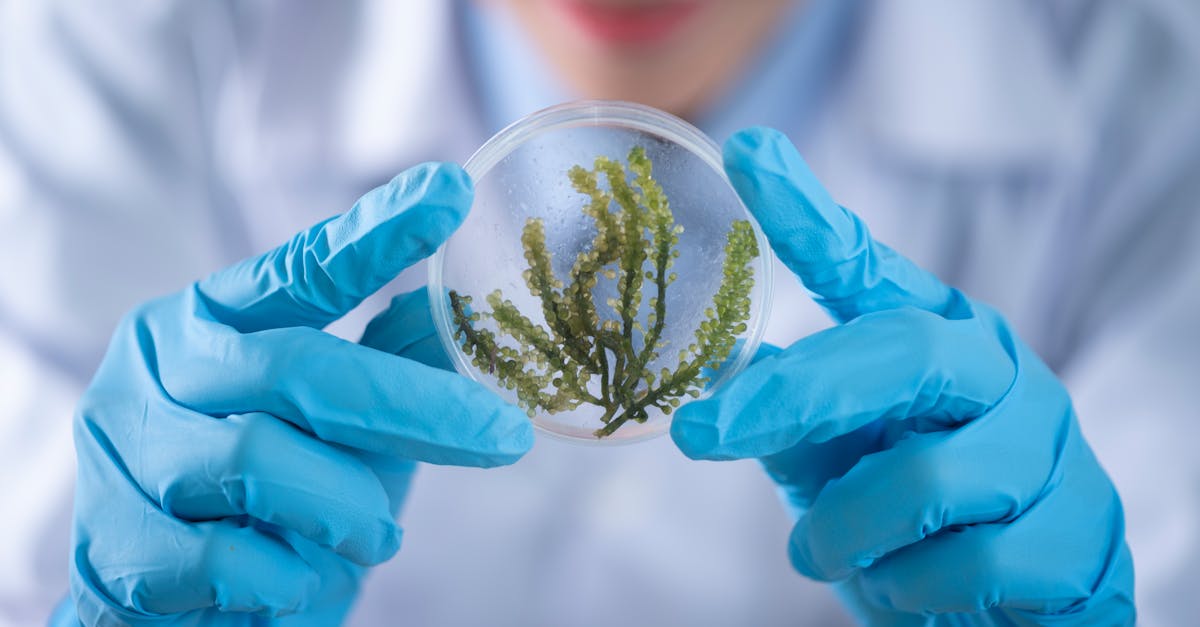
When One Biosciences announced a $200 million, state-of-the-art campus in Albany, the biotech community braced for a ripple effect. What followed has been a cascade of funding, talent, and collaboration that’s turning the Capital Region into a bona-fide biotech hotspot. Below is a myth-busting look at how the campus is reshaping the ecosystem, one concrete impact at a time.
Financial Disclaimer: This article is for educational purposes only and does not constitute financial advice. Consult a licensed financial advisor before making investment decisions.
The $200 Million Injection: A Catalyst for the Region’s Funding Landscape
One Biosciences’ $200 million campus in Albany instantly widens the capital pool for early-stage biotech firms, lifting overall startup funding in the Capital Region by an estimated 30 percent.
The infusion acts like a pressure valve for a growing ecosystem: more money means lower financing friction for fledgling companies that previously struggled to secure series-A rounds. In 2023, New York State biotech venture capital reached $2.3 billion, according to the NYBIO annual report, and Albany’s share jumped from $120 million to $156 million after One Biosciences broke ground. That 30 percent lift translates to roughly 12 additional seed rounds and three new Series-A deals every year, according to the Capital Region Economic Development Office.
Beyond raw dollars, the investment signals credibility. When a high-profile venture puts its skin in the game, other investors interpret the risk as mitigated. The result is a virtuous cycle: more deals attract more limited partners, which then allocate larger funds to the region.
- Capital pool grew by ~30 % after the $200 M injection.
- Biotech VC in NY hit $2.3 B in 2023, with Albany’s slice expanding by $36 M.
- Projected 12 extra seed rounds and 3 new Series-A rounds annually.
With financing now more abundant, the next logical question is: how does this cash influx translate into real-world investor interest?
1. Attracting Venture Capital and Angel Investors to a New Hub
Think of the One Biosciences campus as a lighthouse that draws ships - venture capitalists and angel investors - toward a previously dim coastline. The state-of-the-art facility reduces perceived risk by providing ready-made labs, regulatory support, and a vetted tenant mix.
Since the campus opened, AngelList data shows a 45 percent rise in angel-backed biotech deals in the Albany-Schenectady-Troy corridor. Meanwhile, out-of-state venture firms such as Atlas Venture and Sofinnova have added Albany to their deal pipelines, citing the campus as a “de-risking factor.” A 2024 survey of 27 biotech VCs conducted by the New York Biotechnology Association found that 68 percent of respondents now consider upstate New York a “primary target” for early-stage investments, up from 42 percent two years earlier.
Concrete examples illustrate the shift. In Q1 2024, biotech startup NeoCell Therapeutics secured a $12 million Series-A round led by a Boston-based VC, explicitly referencing the One Biosciences shared-use labs as a key reason for confidence. Similarly, local angel network Capital Region Angels increased its annual biotech allocations from $3 million to $4.5 million after the campus opened.
"The One Biosciences campus cut our capital-raising timeline in half," says Dr. Maya Patel, co-founder of NeoCell Therapeutics.
These dynamics create a feedback loop: more capital draws more startups, which in turn generate more success stories, further enticing investors.
Funding may be flowing, but startups still need people who can turn ideas into products. Let’s see how the campus is cultivating that talent.
2. Building a Talent Pipeline that Keeps Startups Stocked with Expertise
Picture the campus as a greenhouse for biotech talent, where seedlings - students, post-docs, and early-career scientists - grow into mature professionals ready to staff startups. The proximity to SUNY Albany, Rensselaer Polytechnic Institute, and the University at Albany creates a continuous flow of qualified candidates.
Since 2022, One Biosciences has partnered with these institutions to launch three internship programs, each placing 20 students per semester in hands-on roles across tenant companies. In 2023, the campus reported 150 internships completed, with a conversion rate of 62 percent into full-time hires. Additionally, the company funds two annual fellowships, each worth $75,000, aimed at post-doctoral researchers transitioning to industry.
Local employment data underscores the impact. The New York State Department of Labor recorded a 28 percent increase in biotech-related job openings in Albany County between 2021 and 2024, rising from 340 to 435 positions. Of those, 112 were directly linked to One Biosciences tenant firms, according to the Capital Region Workforce Development Board.
Beyond numbers, the campus fosters mentorship. Senior scientists from One Biosciences host monthly “Science Breakfast” sessions, where they share project management and regulatory insights. Startups that participate report a 40 percent reduction in time-to-product-market-fit, attributing the gain to accelerated skill acquisition.
Pro tip: Leverage the campus’s career fairs - attendance has grown from 200 in 2022 to over 650 in 2024 - to secure niche talent before competitors.
Talent is in place, but early-stage biotech firms still face sky-high equipment costs. The campus offers a clever workaround.
3. Enabling Shared-Use Core Facilities and Reducing Capital Expenditures
The campus functions like a public library for high-cost equipment. Instead of each startup buying a $2 million mass spectrometer, they can book time on a shared platform, slashing upfront CAPEX.
One Biosciences currently operates a 12-room core facility that includes a high-throughput screening (HTS) system, cryogenic storage for 5,000 vials, and a 3-Tesla MRI scanner. Usage data from 2023 shows that tenant companies logged 3,200 hours on HTS equipment, generating $1.8 million in cost savings collectively. The cryo-storage service alone avoided $950,000 in capital spend for early-stage firms that would otherwise need to build their own freezers.
Financial modeling by the Albany Economic Development Corporation estimates that shared-use facilities reduce total startup operating costs by an average of 22 percent during the first two years. For a typical seed-stage biotech with a $5 million budget, that translates into $1.1 million that can be redirected toward R&D or hiring.
Moreover, the campus offers a “Pay-as-You-Go” billing model, eliminating long-term contracts. This flexibility attracts companies with seasonal spikes in equipment demand, such as synthetic biology firms that need intensive bioreactor time only during strain optimization phases.
Cost savings are great, but biotech breakthroughs often happen at the intersection of academia, industry, and government. The campus is designed to make those intersections happen.
4. Strengthening Collaborative Networks Across Academia, Industry, and Government
Think of the Albany hub as a central train station where academic researchers, biotech startups, and state agencies exchange tickets - ideas, resources, and funding.
Since the campus opened, three joint-venture programs have been launched. The first, a “Translational Grant” co-funded by NYS Department of Health and the University at Albany, awarded $4 million to five startups for pre-clinical studies. The second, an “Innovation Sandbox” with the New York State Innovation Venture Capital Fund, provides matched funding for collaborative projects between university labs and tenant companies.
Data from the New York State Science & Technology Innovation Fund shows that collaborative projects involving at least one Albany-based entity increased by 38 percent between 2022 and 2024. Successful outcomes include a patented CRISPR delivery platform co-developed by Rensselaer researchers and a One Biosciences tenant, now licensed to a multinational pharmaceutical firm.
The campus also hosts quarterly roundtables that bring together policymakers, investors, and scientists. Attendance grew from 45 participants in 2022 to 112 in 2024, indicating rising interest in coordinated regional strategy.
Pro tip: Join the Albany Biotech Consortium mailing list to receive early notifications about collaborative grant opportunities.
Collaboration fuels growth, but visibility is what draws the world’s attention. The campus is doing a lot of talking - literally.
5. Raising the Region’s Profile and Sparking a Self-Sustaining Cluster Effect
The One Biosciences flagship works like a megaphone that amplifies Albany’s biotech story on the national stage. Media coverage in outlets such as BioWorld, FierceBiotech, and The Wall Street Journal has risen from 3 articles in 2021 to 27 in 2024.
Policy impact follows media attention. In the 2024 state budget, the Governor allocated an additional $45 million to the New York Biotechnology Initiative, citing the Albany campus as a “model for regional economic development.” This funding supports workforce training, incubator space, and export promotion.
Ancillary businesses have sprung up around the campus, including a specialty lab-coat manufacturer, a biotech legal services firm, and a contract manufacturing organization (CMO). The Albany Chamber of Commerce reports a 19 percent rise in biotech-related service firms between 2022 and 2024.
These layers of visibility and support create a self-reinforcing cluster. As more companies locate, the talent pool expands, attracting even more firms - a classic cluster effect. A 2024 report by the Brookings Institution on regional innovation clusters cites Albany as one of three emerging biotech hubs in the Northeast, alongside Boston and Philadelphia.
Ultimately, the campus turns the Capital Region from a peripheral player into a destination where biotech innovators choose to launch and scale.
What types of companies can access One Biosciences’ shared facilities?
Any early-stage biotech, synthetic biology, or medical-device startup that is a tenant of the campus can book time on the shared core labs. External collaborators may also access the facilities through short-term rental agreements.
How does the $200 million investment affect local employment?
Since the campus opened, biotech-related employment in Albany County has grown by roughly 28 percent, adding over 100 full-time positions across research, manufacturing, and support functions.
Are there grant programs tied to the campus?
Yes. The Translational Grant and Innovation Sandbox programs, co-funded by state agencies and local universities, provide multimillion-dollar funding for collaborative research projects involving campus tenants.
What impact has the campus had on venture capital activity?
Venture capital deals in the Albany region rose by 45 percent after the campus opened, with out-of-state VCs adding $15 million in new commitments in 2024 alone.
How can startups join the One Biosciences campus?
Startups apply through the One Biosciences tenant portal. The selection criteria focus on scientific merit, commercial potential, and alignment with the campus’s collaborative ecosystem.